
Community-led co-design kit
Fostering community leadership in design processes
Open educational resource + UX UI
2023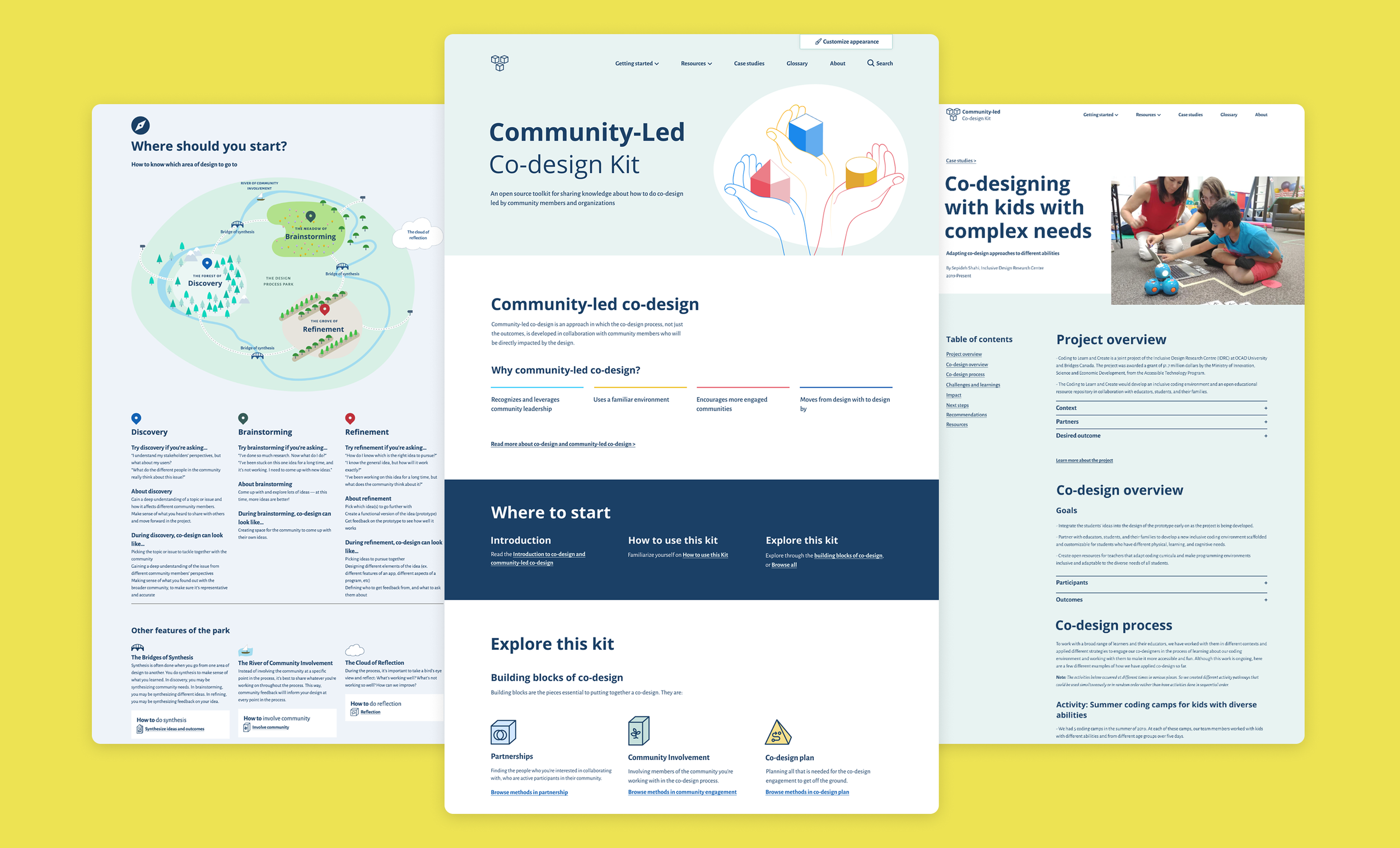
Overview
The Inclusive Design Research Centre at OCAD University has been working with community organizations, governments, and individuals for the past 30 years in making technology and its practices and policies more inclusive. We wanted to share our thinking and practice of community-led design with the broader Inclusive Design community - including other designers, artists, community practitioners, and potential partners to build a shared understanding and begin to foster a larger community of practice.
This is an open source project, and the effort to update and add more resources are ongoing.
Background
Visit the Community-Led Co-design Kit
My role
Designer and author
Inclusive Design Research Centre
Illustrations by Dana Ayotte.
Funder
Process
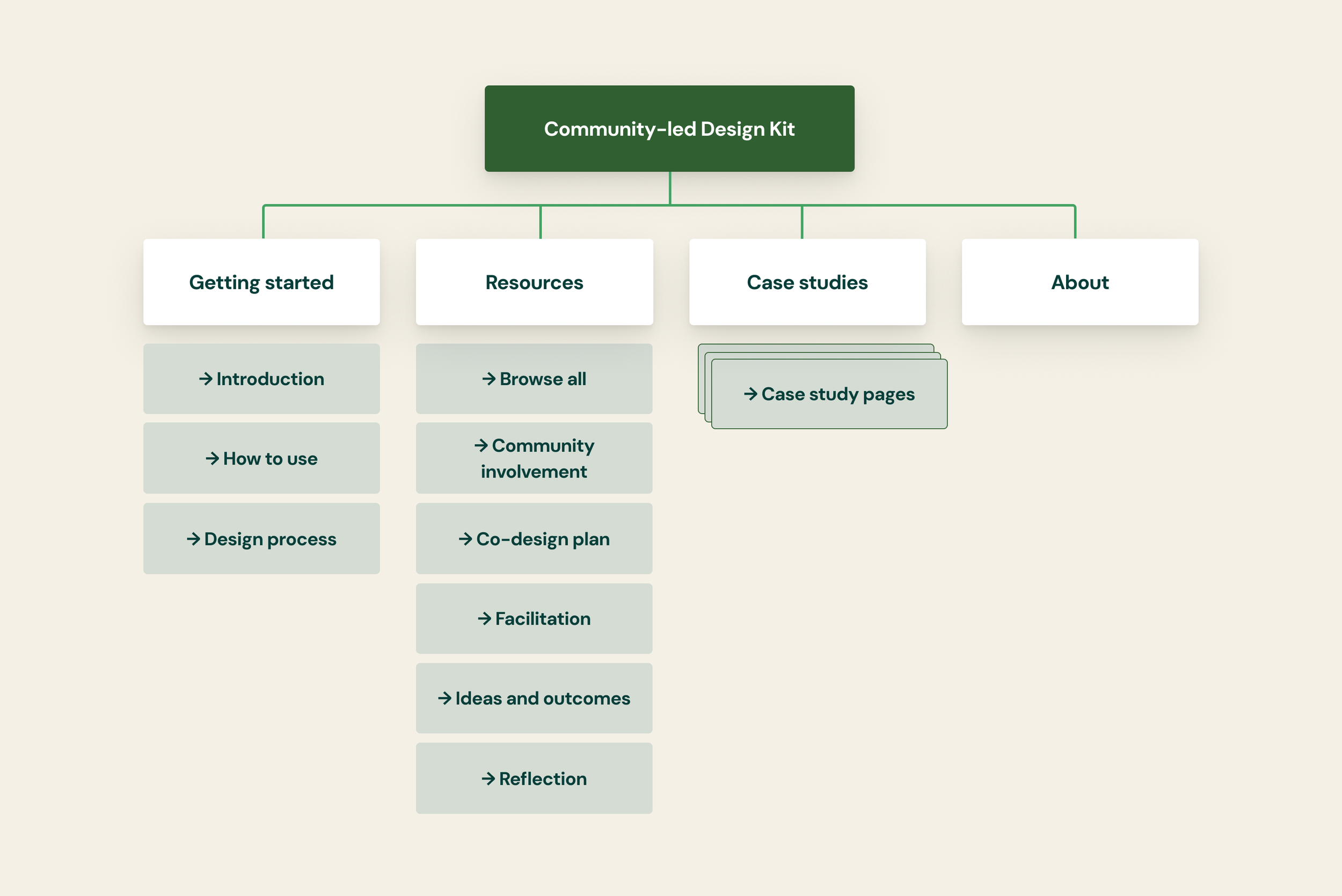
The site map reflects the four core sections of the site:
Getting started: Where someone accessing the resource for the first time can go to. It also provides an introduction to co-design, for those who are less familiar with the practice.
Resources: Where all the resources live, in categories determined through a card sorting exercise with users.
Case studies: Where case studies of specific projects live.
About: Brief information about the project and kit.
Site map
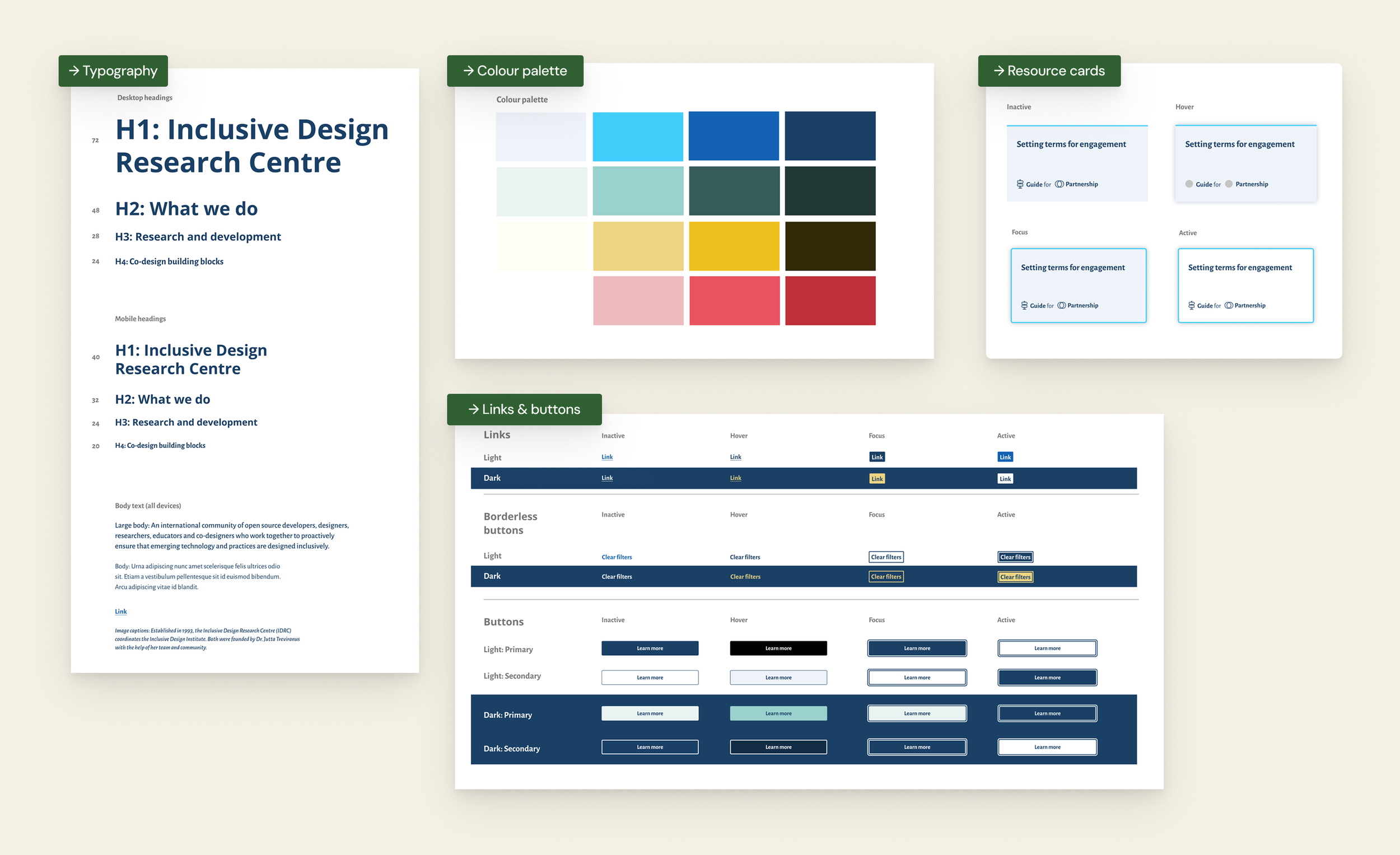
The design system was quickly established to assist with parallel development efforts.
This image shows a sample of some key styles and components, including a sample of the states table that maps out all the states for interactive components.
Design system
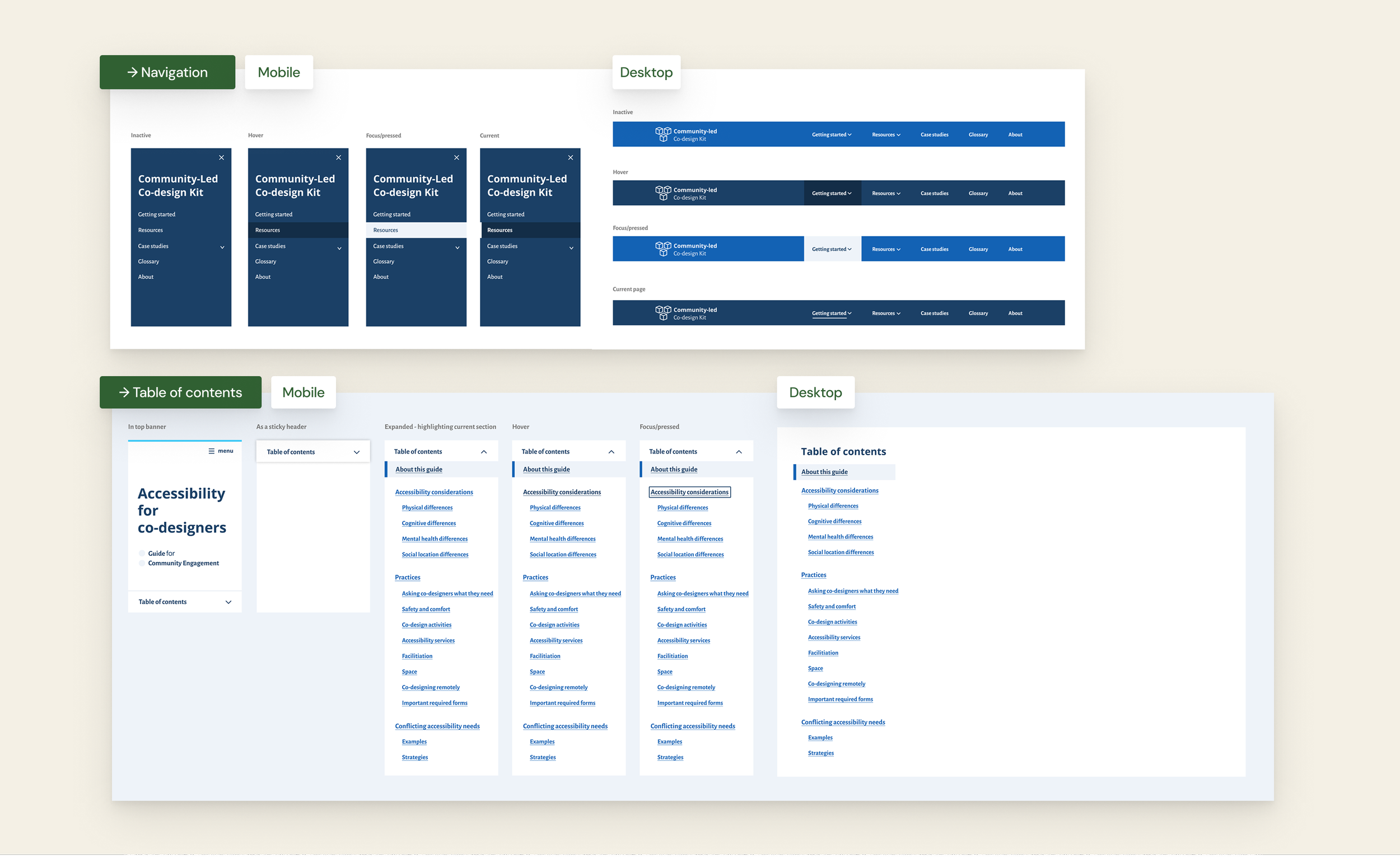
Components were designed in both mobile and desktop states, so that the website would scale seamlessly.
This image shows two of the more complex components to design: The navigation with nested menus, and a table of contents with in-page links for resource pages.
Responsive components
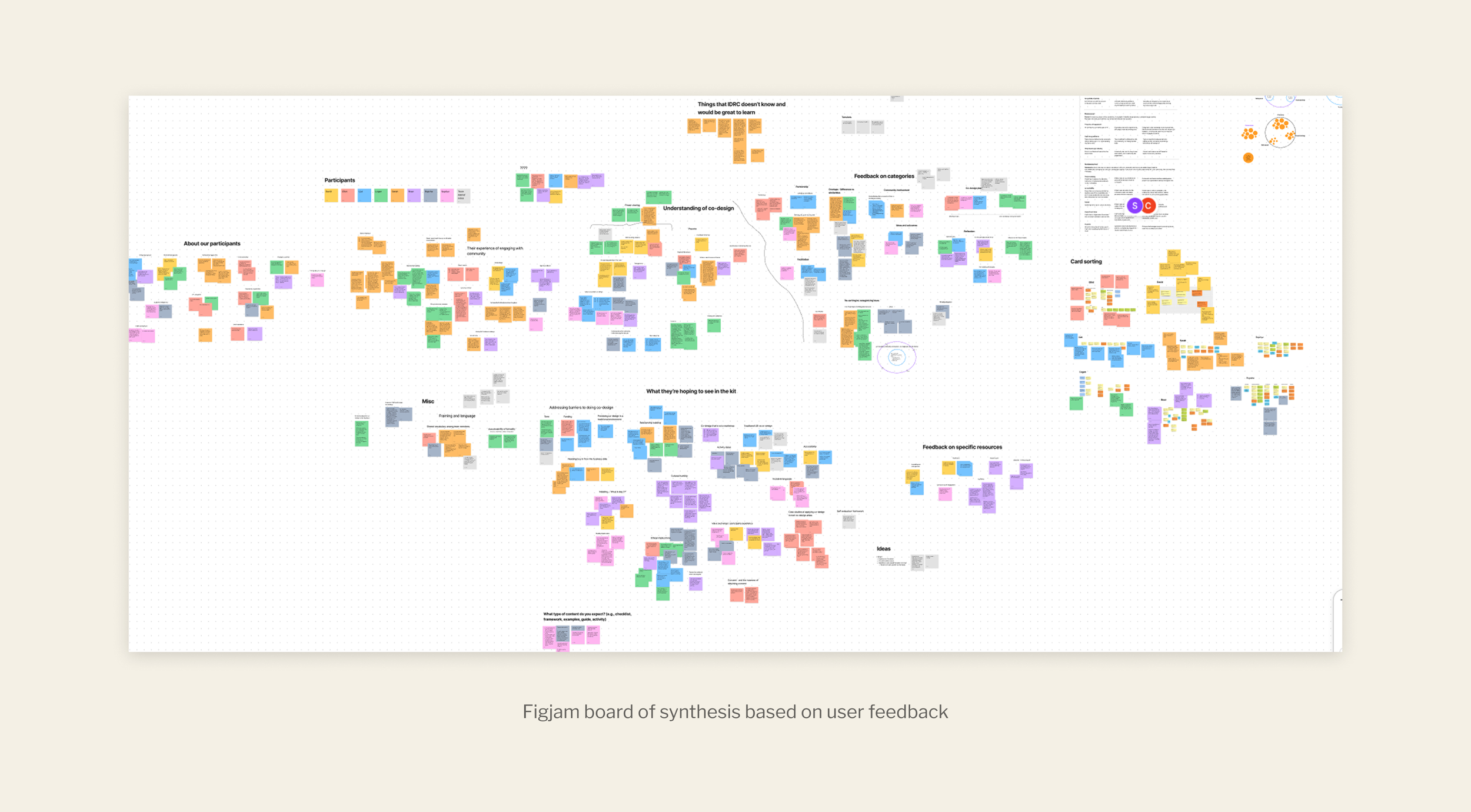
Our team sought external feedback from designers and community workers to see if our content was useful, comprehensible, and desirable. These often took place as one-on-one interviews with small activities such as card sorting. We were able to:
Expand the definition of community-led co-design beyond what’s defined by design practice
Refine our main resource categories to match the mental models of both community and design practitioners
Better understand the learning goals of our users, and write and frame content to meet those goals
User feedback
Outcomes
Since launching the kit, it has been used by practitioners and educators to learn about how to enhance collaboration with the communities they’re working with.
Community resource
The kit has also been used as a tool to communicate with potential partners and funders about our practice and approach.
Communication tool
A small community of practice was formed to work on this kit a few times a year, and share knowledge with each other. We’re always open to new collaborators and contributors to join us.
In the future, the goal is to focus more on resources about relationship-building, put together a co-design activity library, and work to translate the text into more easily accessible checklists, worksheets, and case studies / anecdotes.
Community of practice
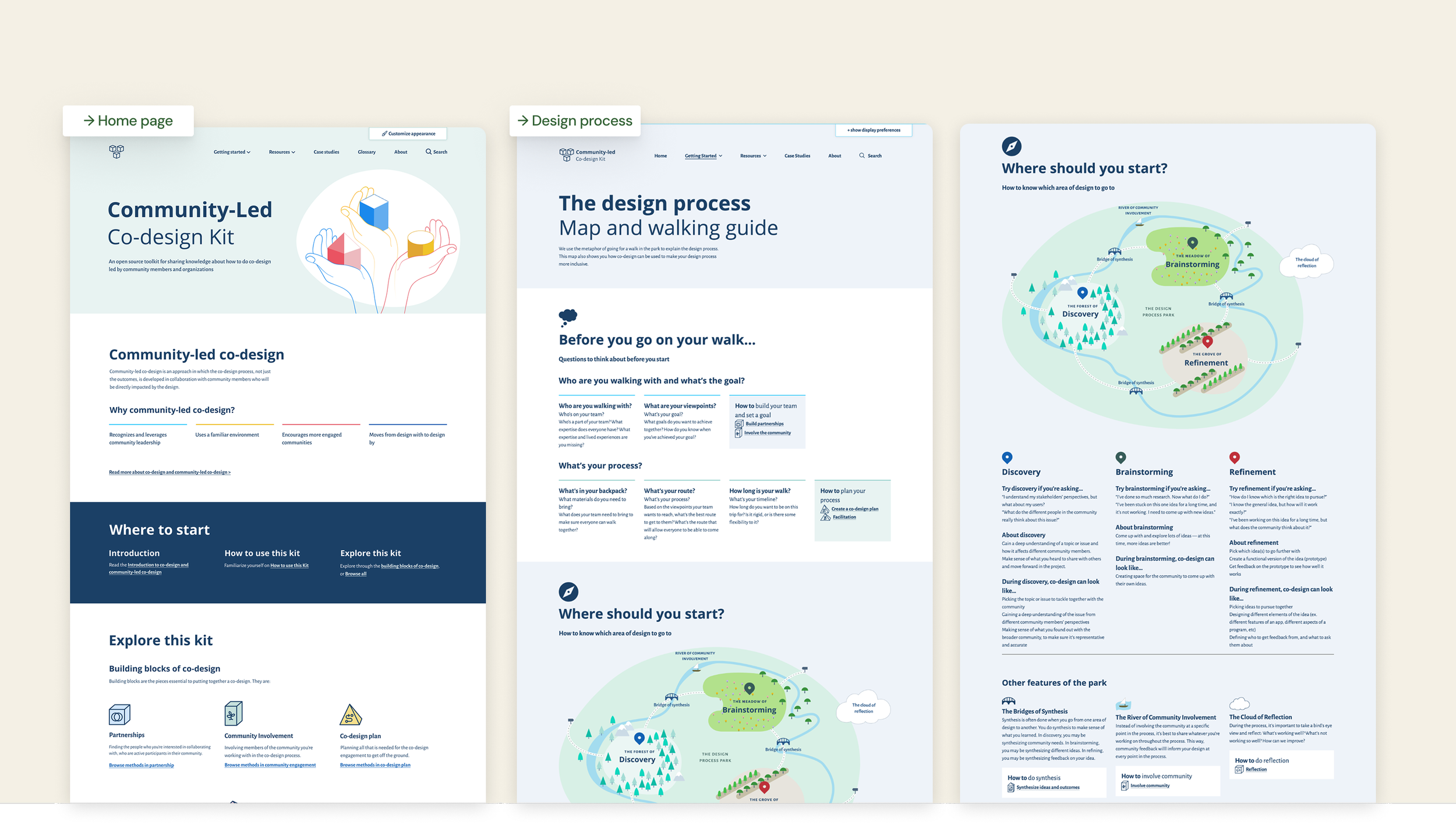
Screenshots of the home page and the design process pages. 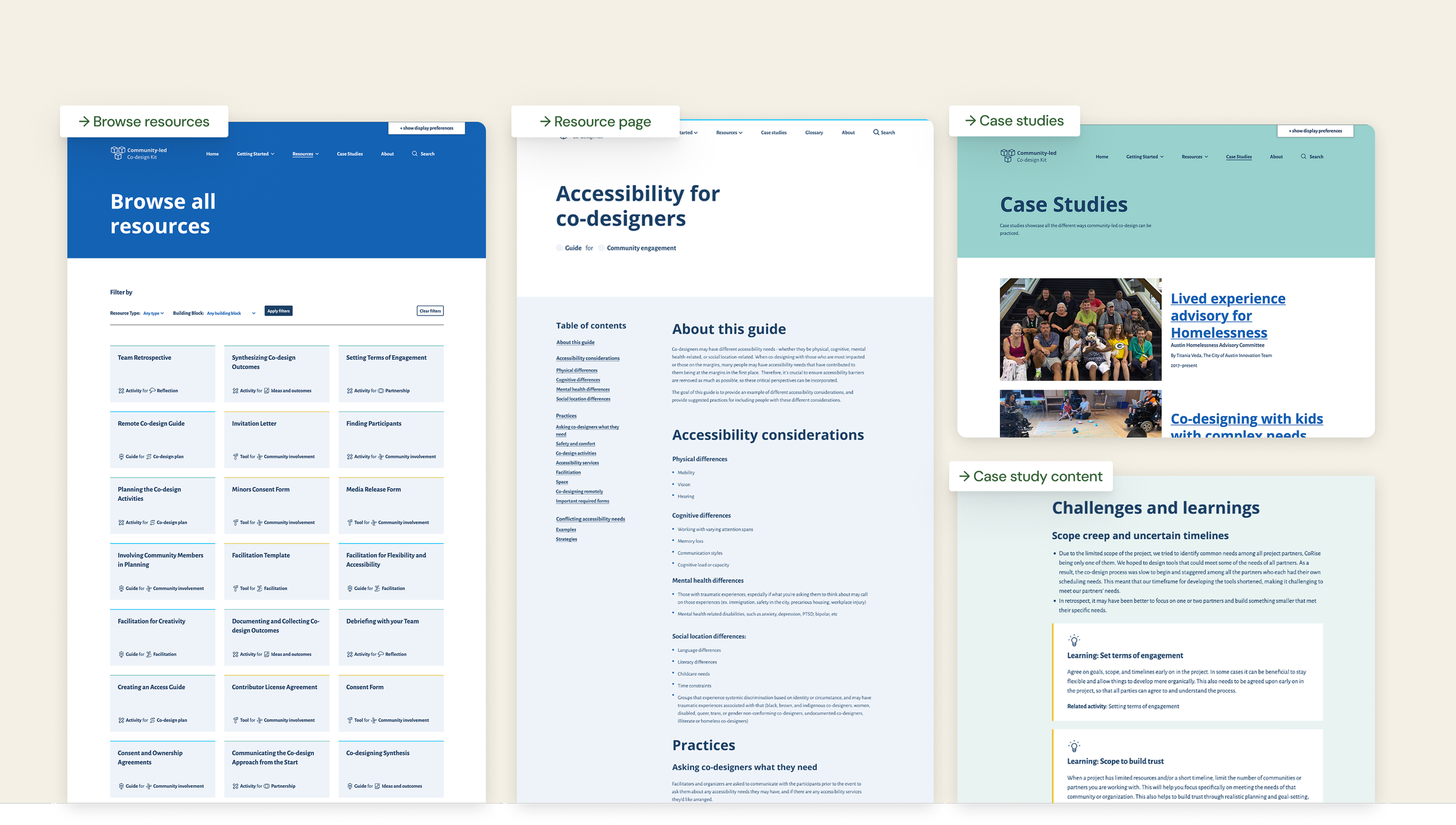
Screenshots of the resource pages and case study pages. Summary
The Community-led co-design kit provides a valuable resource for design practitioners, community workers, and educators to learn more about a community-focused practice, and how to meaningfully engage community in design and development initiatives.