
Residences for Independent Living
Co-creating care models for long term care
Health design + Co-design
2025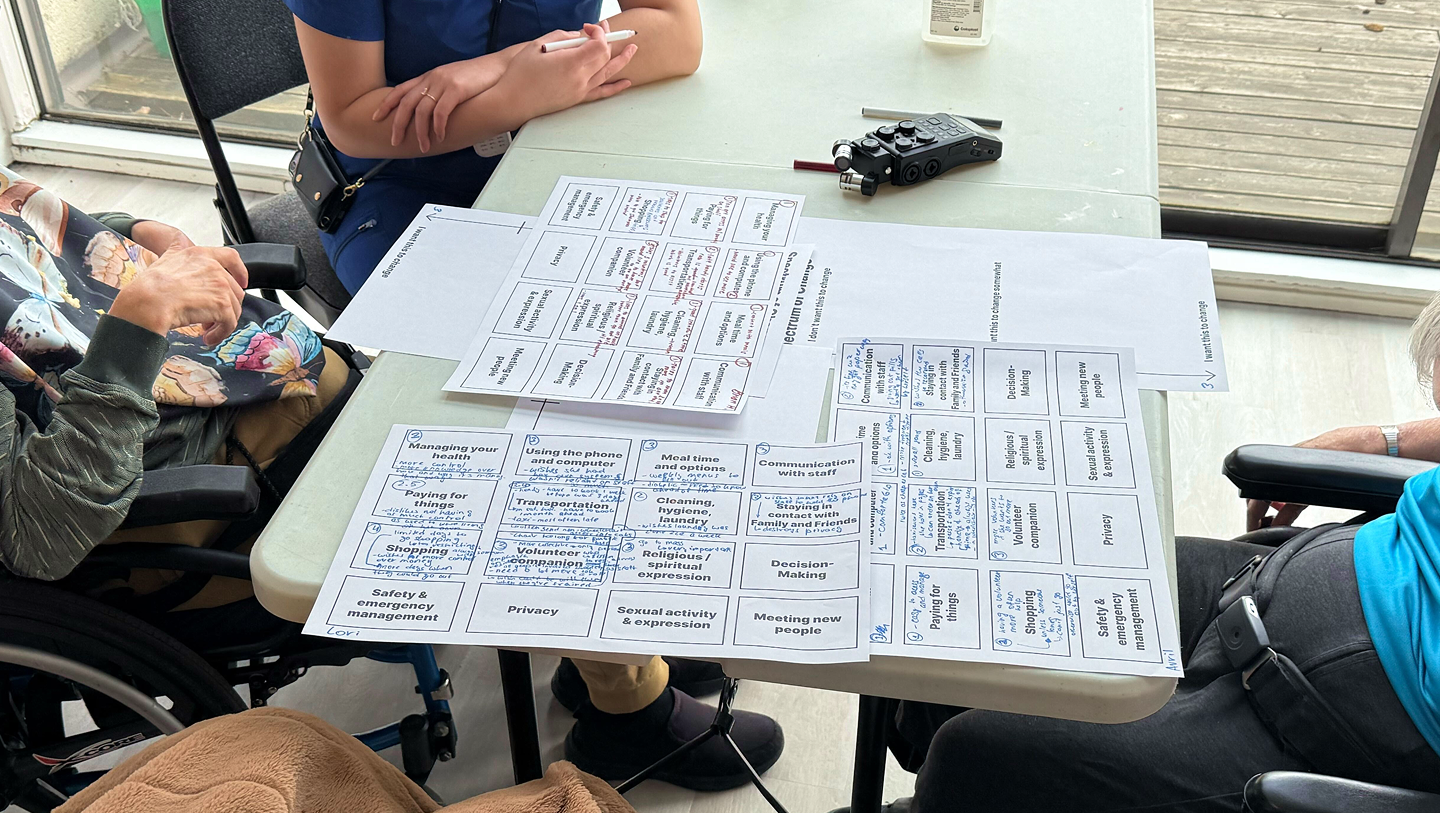
Overview
Background
Residences for Independent Living Society (RILS) False Creek is a long term care home that cares for adults with disabilities. They are preparing to transition from a long term care home to supported housing structure, and wanted to learn about how to best navigate this shift while centering the residents’ needs, desires, and abilities.
The project also reflects a broader move for the organization, from a traditional institutional model of care toward a social model rooted in people’s hopes, needs, and visions of a “life worth living” (Vancouver Coastal Health Long Term Care Design Guidelines, 2020).
Over four months, the Health Design Lab worked with the RILS community to explore:
What does a meaningful, purposeful, and connected life look like for residents?
How can residents be supported to live more autonomously?
What barriers limit that autonomy?
Goal
My role
Project Lead
Health Design Lab
Partners
Residences for Independent Living Society (RILS) False Creek
Funder
Emily Carr University’s National Sciences and Engineering Research Council (NSERC) Mobilize grant and Residences for Independent Living Society
Process
RILS False Creek offers semi-independent housing with 24/7 healthcare and recreation support. Many residents have lived here for 20–30 years, forming strong bonds and a tight-knit community.
Partnership
In partnership with the RILS leadership team, we designed an inclusive engagement process involving:
Co-design approach
Residents
We led a co-design workshop series to explore what a meaningful life means to them, what supports they need, and what limits their independence. Follow-up 1:1 interviews deepened these insights.
Staff
Care aides, nurses, and recreation staff participated in a co-design workshop and anonymous writing activity to share how they interpret the social model of care and what challenges they face in applying it.
Family and support systems
We held a virtual workshop with families to understand their experiences supporting loved ones and what support they need themselves.
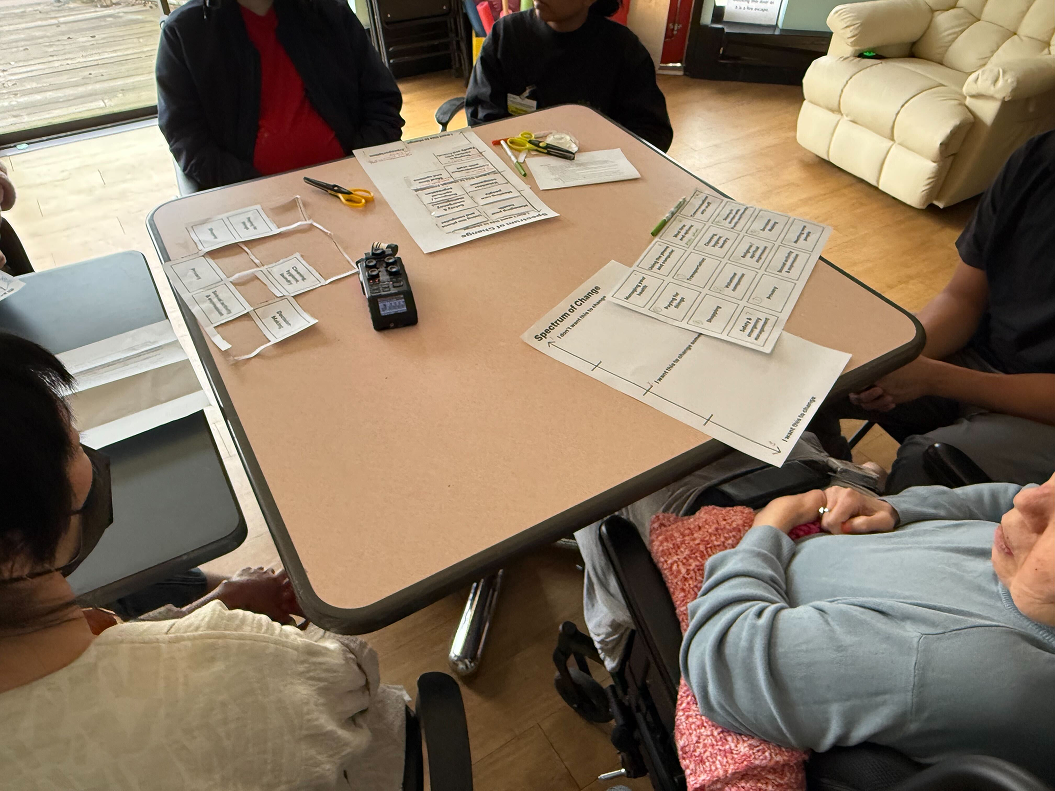
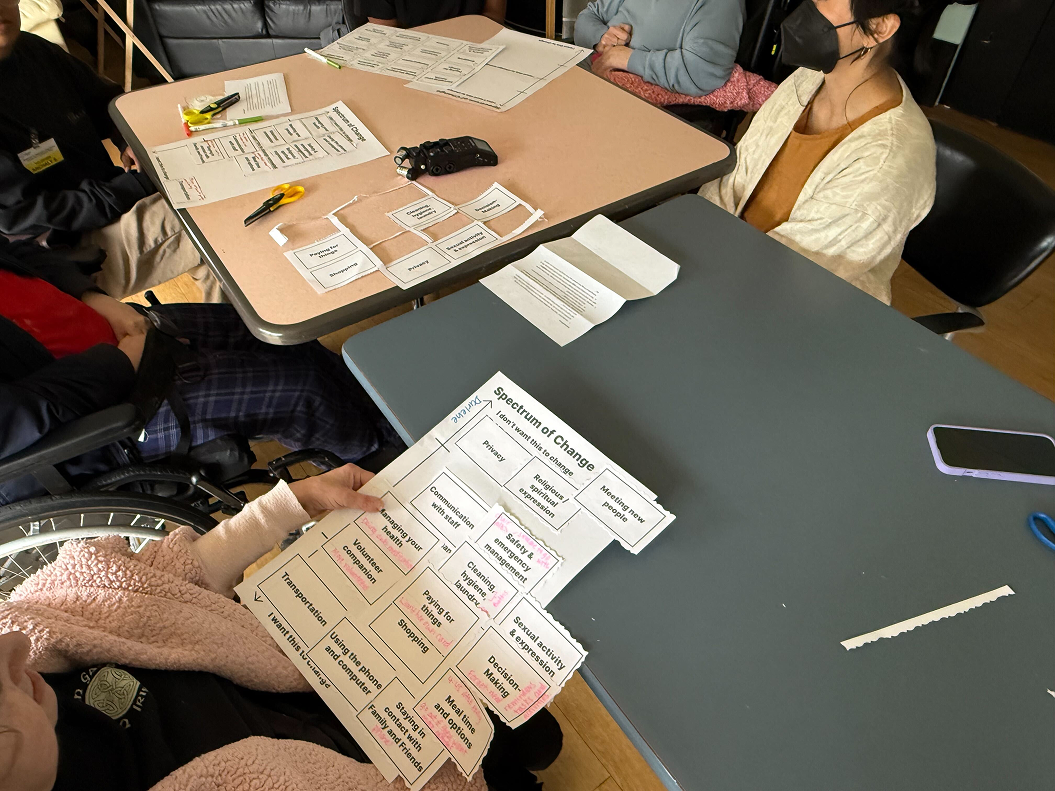
Over the span of four months, we had:
60
participants
6
workshops
21
interviews
3
surveys & written activities
Outcomes
This project culminated in an extensive research report that blended insights from all of the RILS False Creek Community Members. Presented to RILS leadership, the report serves as a guide for the transition to supported housing in a resident-centered way and as a foundation for both long-term initiatives and immediate improvements within the residence.
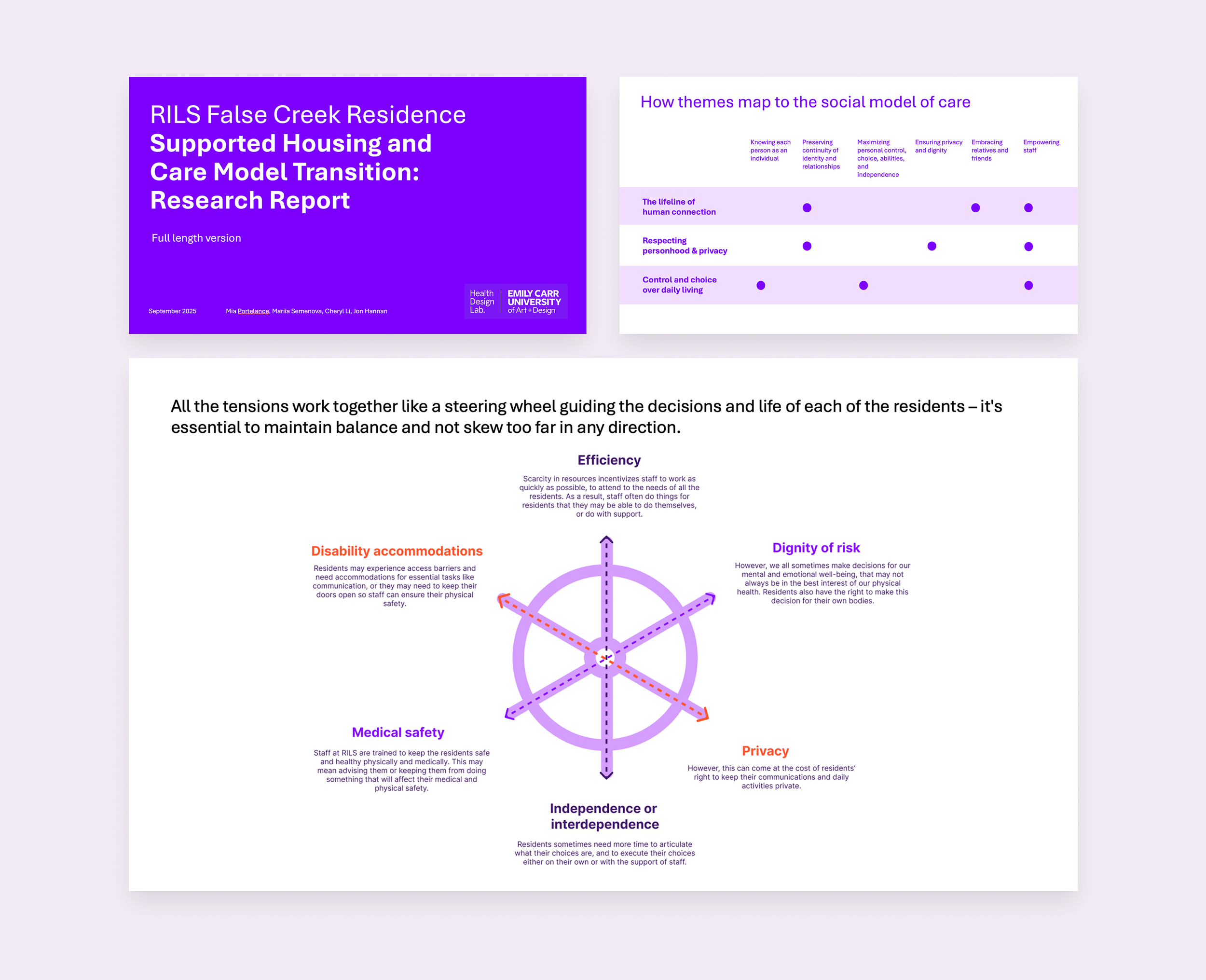
Selected screenshots of the final research presentation.Summary
This project served as a model for how co-design and inclusive research can shape organizational transformation in care settings. By centering the lived experiences of residents and those closest to them, RILS False Creek is taking critical steps toward enabling more autonomy, connection, and dignity in everyday life.