
The Accessibility Exchange
Facilitating inclusive consultation processes
Digital platform
2020-2023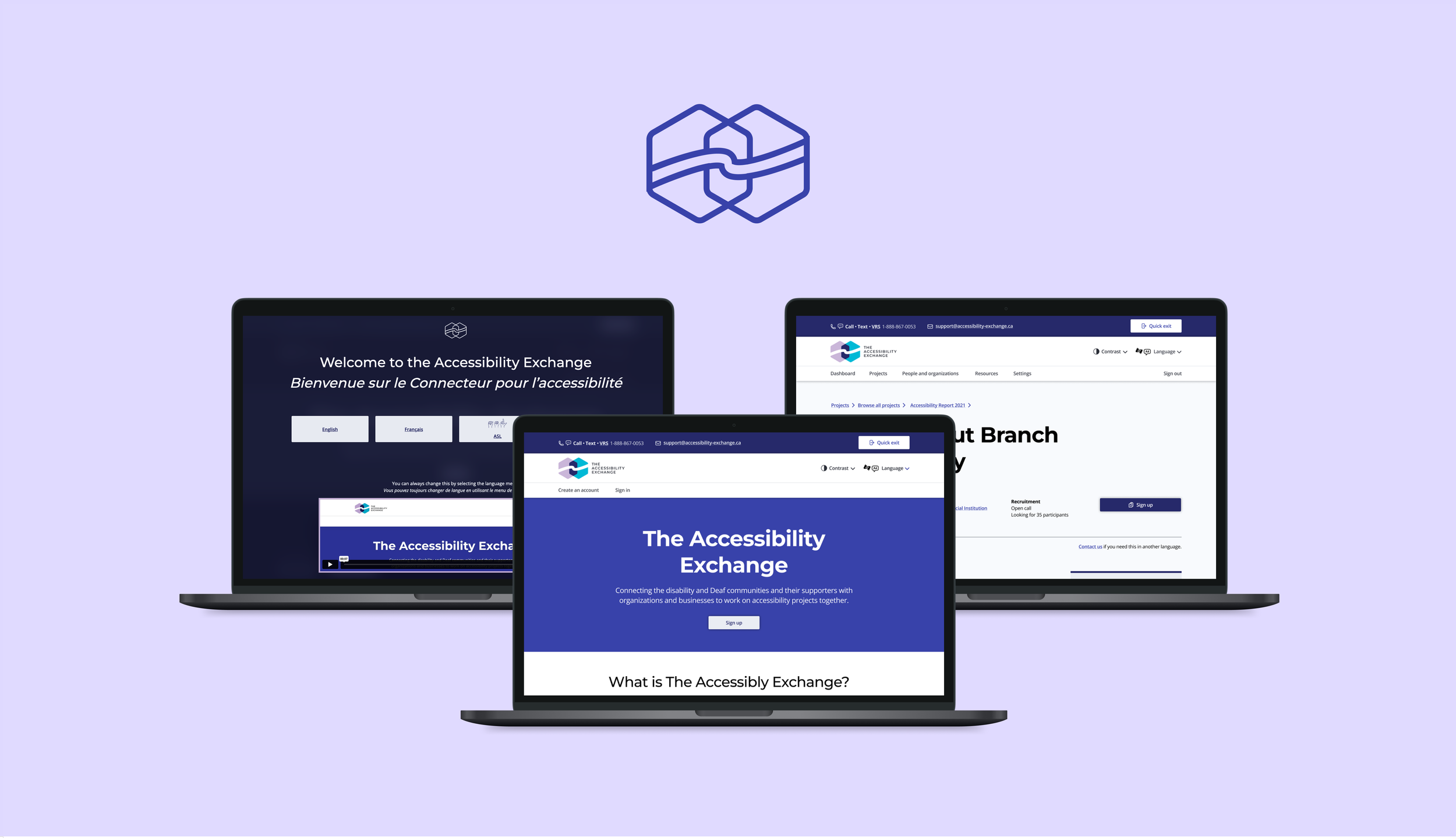
Overview
The Accessible Canada Act (2019) aims to make Canada barrier-free by 2040. Under the Act, regulated organizations must consult with the disability and Deaf community when developing accessibility plans. However, many organizations don't have connections to the disability and Deaf community - or know how to respectfully and ethically do these consultations.
Background
To design a digital platform that enables regulated organizations to consult with the disability and Deaf community in a way that is inclusive, ethical, and rooted in accessibility best practices.
Goal
My role
Researcher and Designer
Inclusive Design Research Centre
Partner
New Society Institute
Funder
Employment and Social Development Canada
Process
Partnership
New Society Institute (NSI) is a non-profit research, social development, and design organization that supports systemically marginalized people and communities, creating systems and structures that work for them.
NSI formed an advisory panel of over 15 disability and Deaf organizations, and connected us to a broad network of co-designers with lived experiences across disability, race, gender, sexuality, immigration, and more.
Discovery
Research goals
Understand barriers that disabled and Deaf people face in participating in consultations.
What have been some barriers to providing feedback on accessibility to organizations in the past?
What does an accessible and ethical consultation look like to you?
How do we ensure a cross-disability perspective is represented in consultations?
What we did
Co-design workshops: Workshops were planned with multiple user groups, grouped by identity and lived experience to ensure safety and candid discussions
Community-facilitated: Some sessions were co-facilitated with community members; others were community-led
Outcomes
We synthesized findings into a journey map and service blueprint for an ideal feedback process. Participants emphasized that consultations should:
Prioritize participant accessibility over organizational convenience
Include multiple community voices, not just one "representative"
Be accountable, with clear paths to implementation and follow-up
Our engagements included:
100+
individuals with disabilities
25
community organizations
8
federally regulated organizations
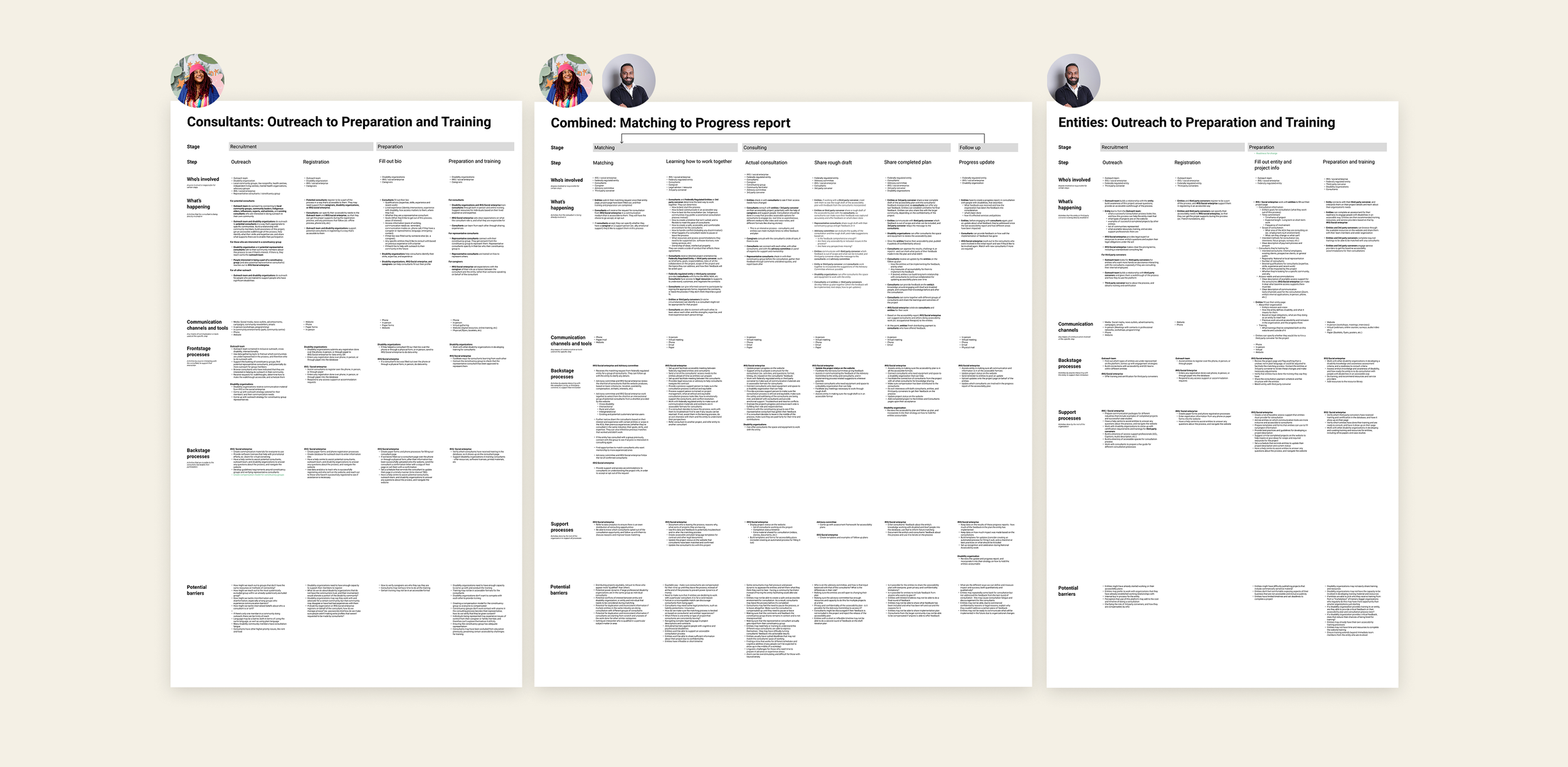
Participants expressed the ideal process about not just the digital experience, but also how the service can be communicated and operationalized. A service blueprint for the ideal state was created to document this. Ideation
Goal
Now that we understood what the key barriers were to inclusive consultation and what the ideal process should look like, we wanted to collaboratively sketch and brainstorm the key parts of this platform with participants.
What we did
Created low-fidelity sketches based on discovery phase insights
Held co-design workshops where we updated sketches in real time based on participant input
Outcomes
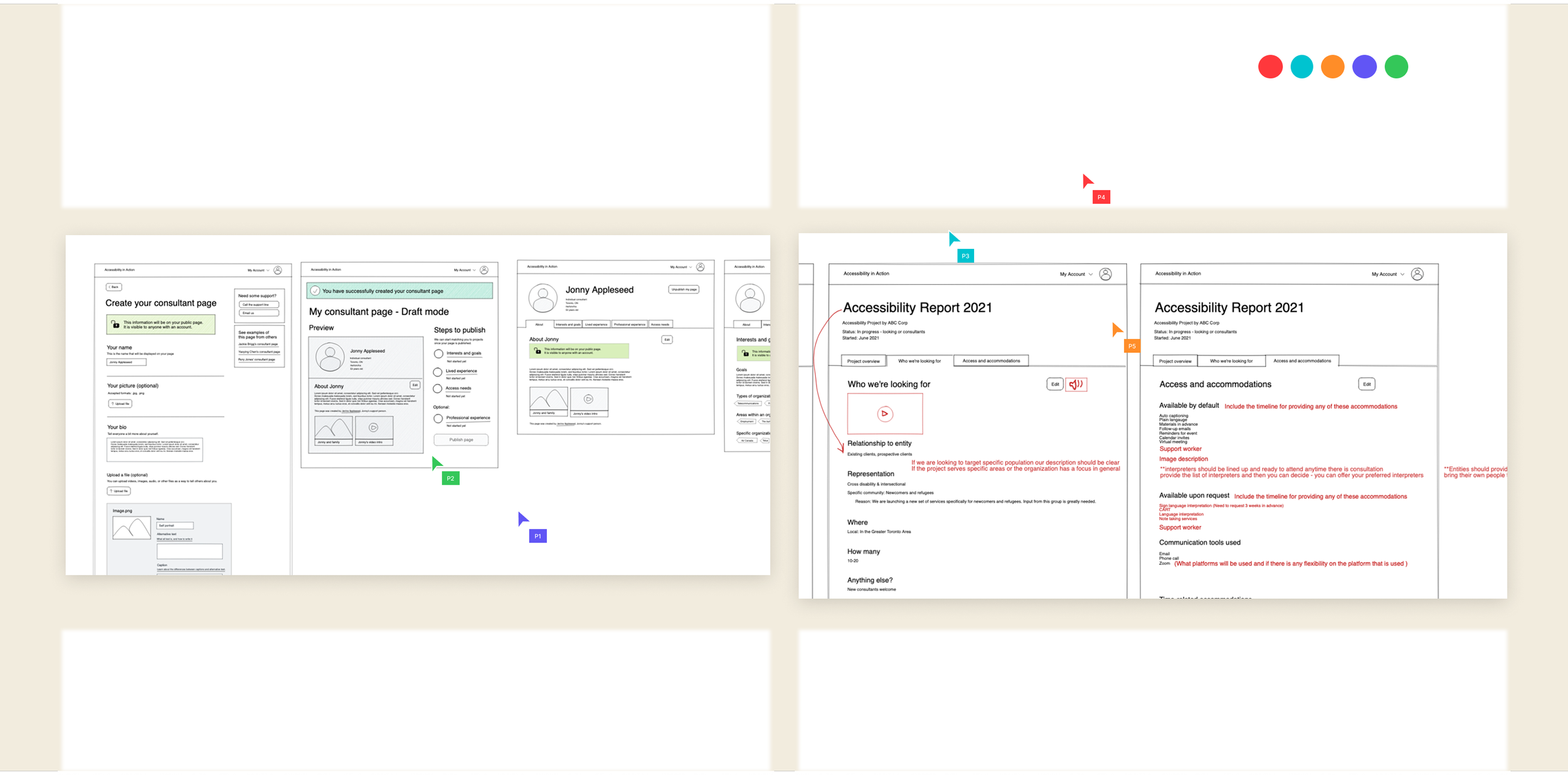
A more informed set of wireframes that reflected direct feedback from diverse users.
Screenshots of the low-fidelity sketches that were taken into co-design workshops to be edited and refined in real time with participants. Since it was a remote co-design session, digital sketches were preferred over physical.Prototyping & design system
Goal
Taking the initial set of sketches, our team continued to refine and iterate on the prototype.
What we did
Created a working prototype
Create and scale a fully-accessible design system that meets WCAG2.0 AA standards.
Held regular feedback sessions with returning co-designers from earlier phases
Outcomes
A functional prototype with co-designed user flows and accessibility and inclusive considerations baked in.
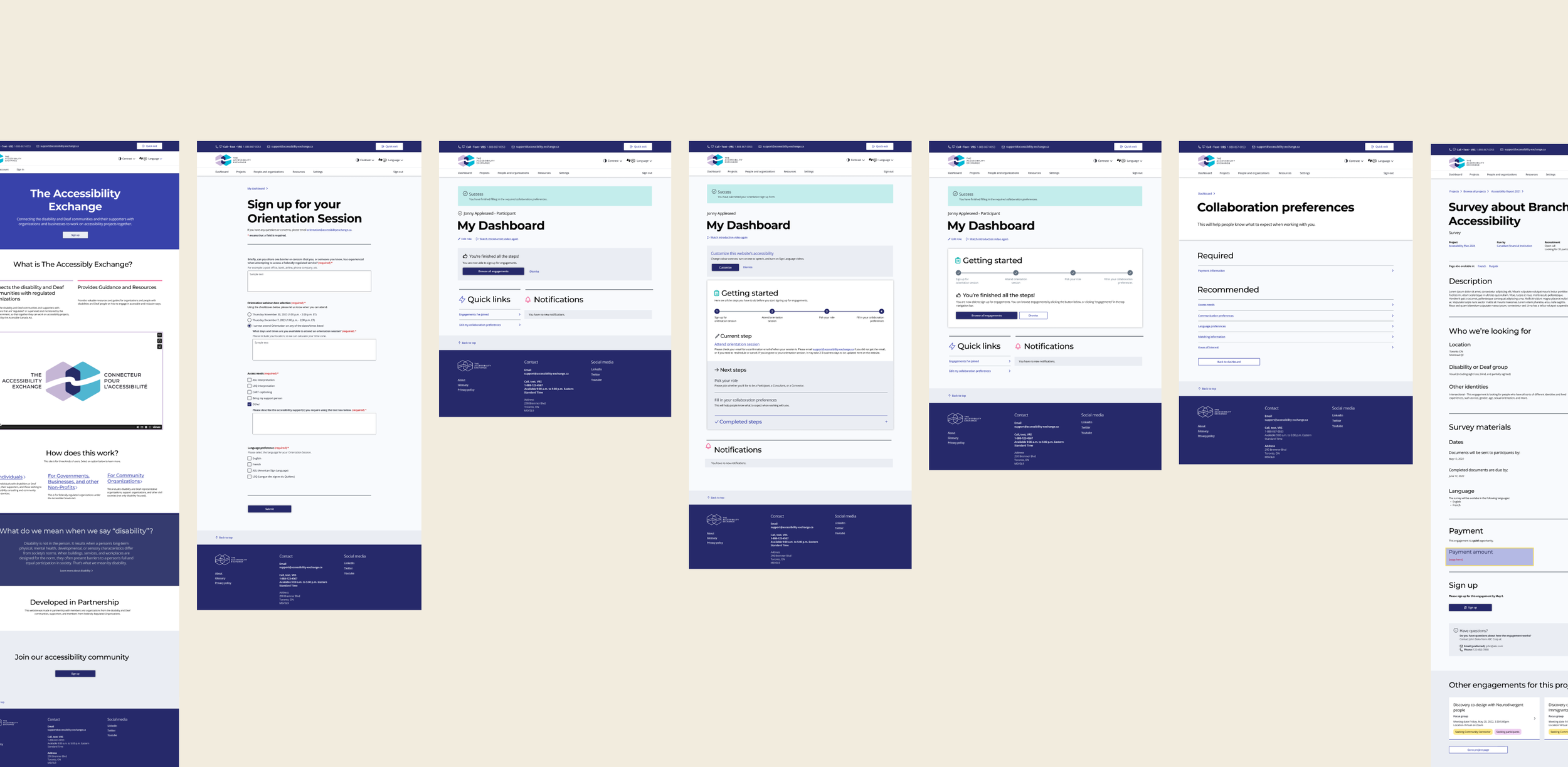
Screenshots of the high-fidelity mockups in Figma.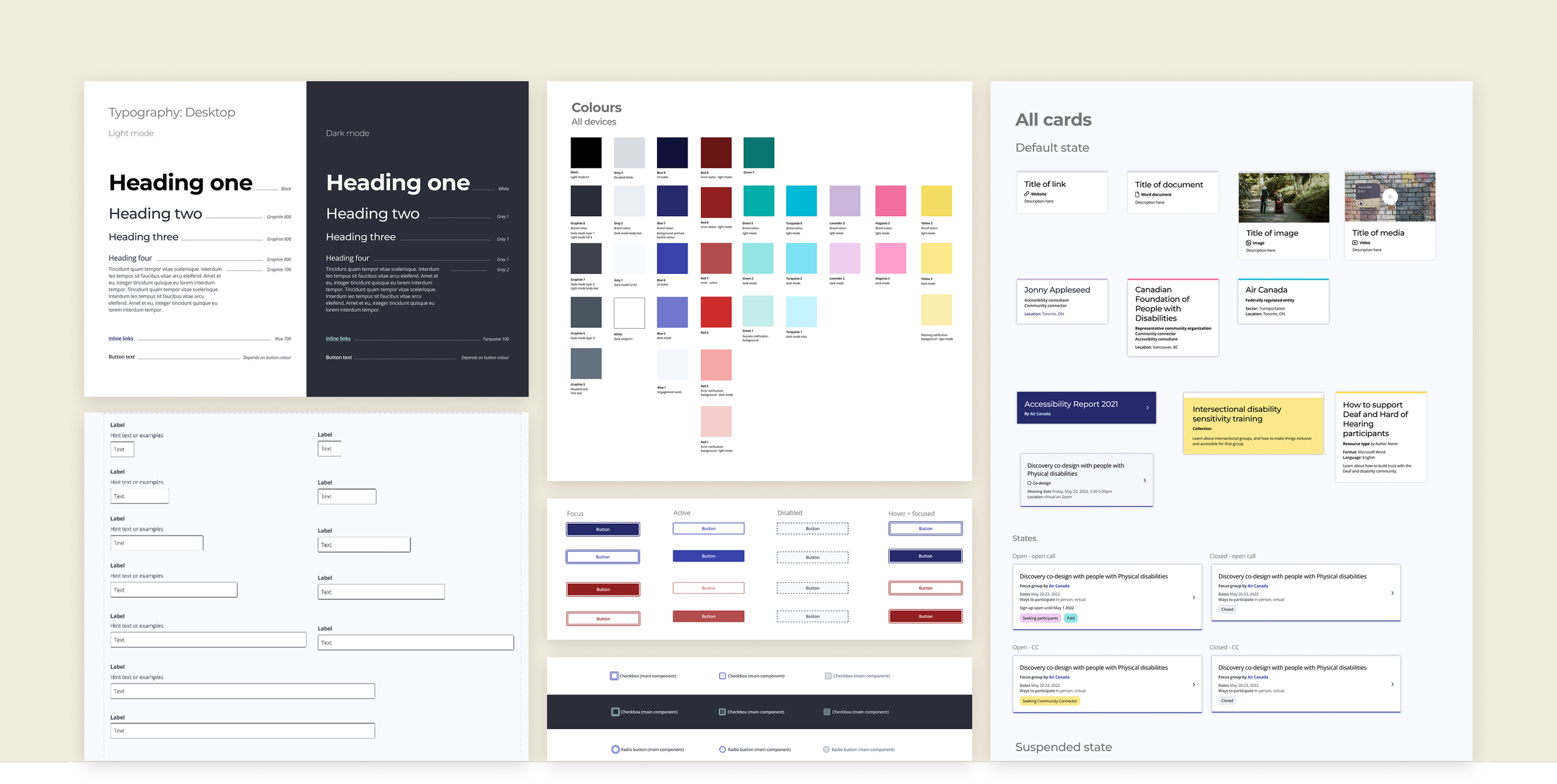
Selected screenshots of the design system, including colour, typography, form elements, buttons, and cards.Usability & accessibility testing
Goal
To continually conduct usability and accessibility testing as new functionalities rolled out.
What we did
Ran 1:1 sessions with:
Screen reader users
Switch users
Text-to-speech users
Screen magnifier users
ASL and LSQ first-language users
Outcomes
A detailed research report to collectively prioritize issues with our partner organization
A prioritized GitHub issue list covering bugs and improvements for future platform updates.
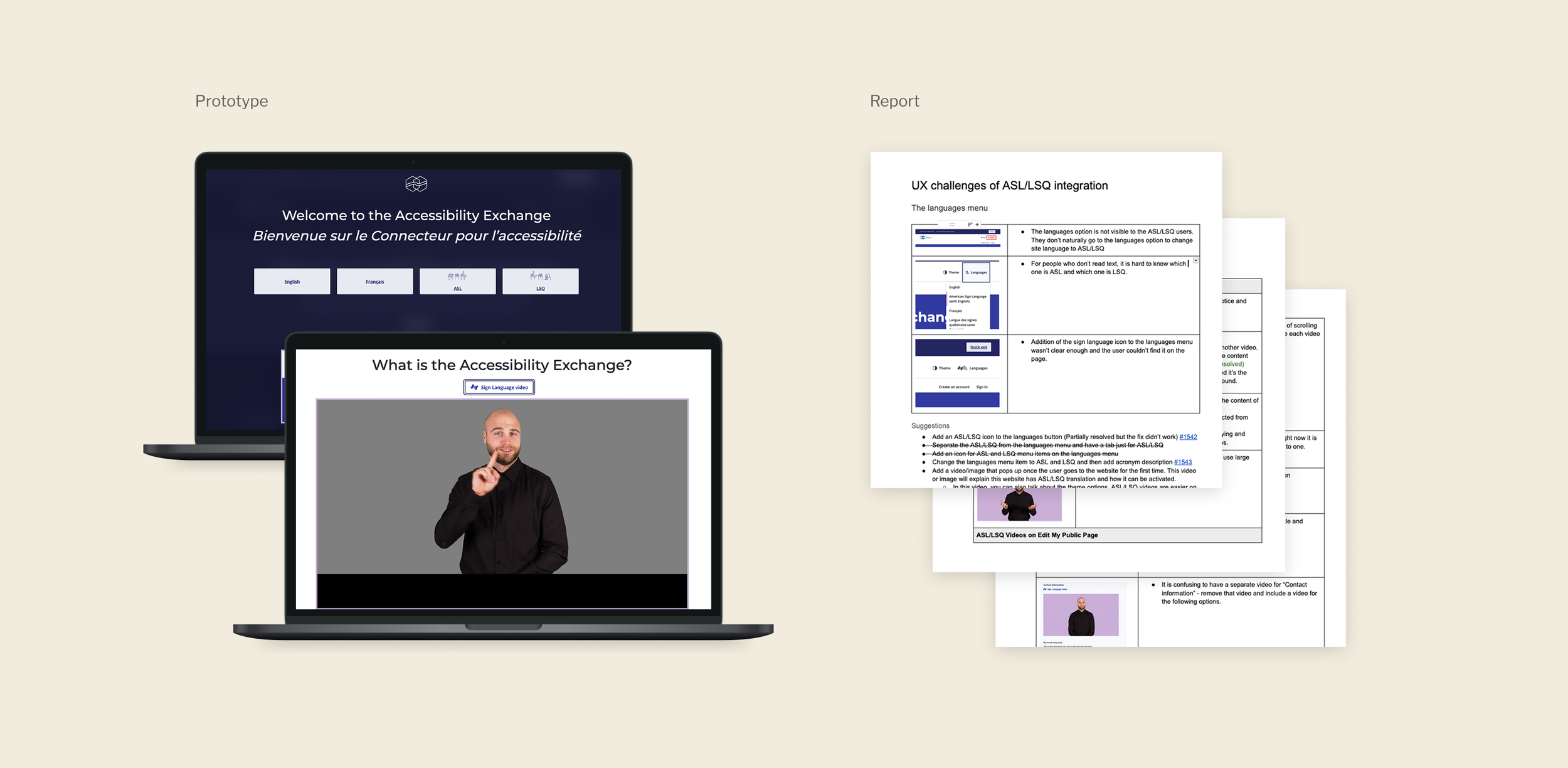
Selected screenshots of the language selection screen and Sign Language introduction, and screenshots of pages of the accessibility testing report on these features.Outcomes
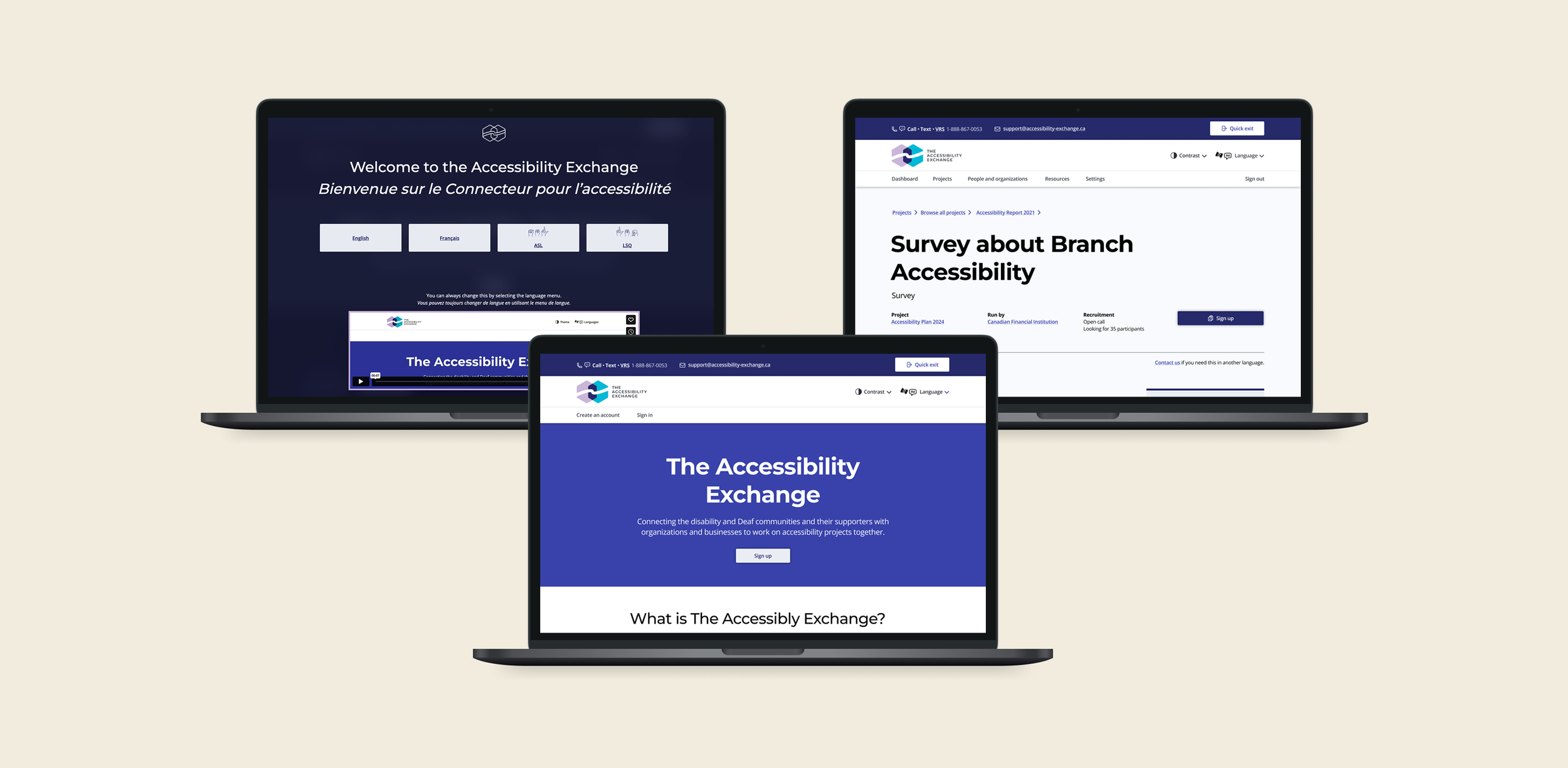
A live, working platform
The Accessibility Exchange is now live and supporting meaningful consultations between regulated organizations and the disability and Deaf community.
Social Enterprise Infrastructure
NSI has since launched a social enterprise to support the platform’s service backbone. Further funding is in progress to expand this organization.
Language Accessibility: ASL & LSQ
One of the few platforms of its kind to be fully translated into American Sign Language (ASL) and Langue des signes québécoise (LSQ) — not just captions, but native language interface translation. Read more about the ASL and LSQ translation process.
Summary
This project demonstrates how inclusive digital platforms can be co-designed with the communities they aim to serve—not just consulted as an afterthought.
The Accessibility Exchange sets a new standard for ethical, accessible, and community-accountable consultation.